

Blood moon symbolism is commonly associated with transformation, emotional intensity, endings, renewal, intuition, shadow work, and major life cycles. Its deep red appearance can make an ordinary full Moon suddenly feel mysterious and unusually significant.
Astronomically, a blood moon is not a separate type of Moon. The nickname describes the reddish-orange appearance that can occur during a total lunar eclipse. NASA documented another total lunar eclipse on March 3, 2026, explaining that sunlight filtered through Earth’s atmosphere produces the dramatic color.
Spiritually, that movement from brightness into shadow and back into light creates a natural metaphor. A blood moon may invite reflection on what is ending, what remains hidden, and what is ready to change.
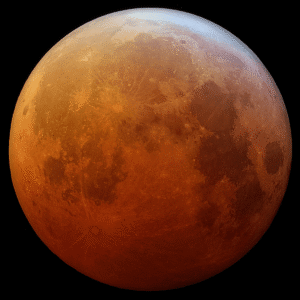
Table of Contents
What Does Blood Moon Symbolism Mean?
At its core, blood moon symbolism represents a period when something usually familiar appears completely different. The Moon remains the same object, yet Earth’s shadow changes how we perceive it.
That contrast makes the phenomenon a compelling symbol for personal transformation. You may still be the same person while your emotions, priorities, relationships, or circumstances are shifting around you.
The blood-red color adds intensity. Red commonly evokes life, passion, courage, conflict, desire, and emotional energy.
A blood moon may therefore symbolize a moment when feelings that were previously muted become difficult to ignore. Rather than predicting an event, it can serve as a visual metaphor for becoming more conscious of what is already changing.
The Quick Meaning of a Blood Moon
The meaning of blood moons can be summarized through seven recurring spiritual themes:
- Transformation — moving from one phase of life into another.
- Release — letting go of patterns that have reached their natural end.
- Shadow work — becoming aware of emotions you usually avoid.
- Intuition — listening more closely to subtle inner signals.
- Courage — confronting an uncomfortable truth.
- Completion — recognizing that a cycle has run its course.
- Renewal — creating space for something different to emerge.
These meanings are reflective interpretations rather than guaranteed supernatural messages. A blood moon does not scientifically predict personal changes or future events.
Its symbolic power comes largely from what happens visually. The familiar Moon enters darkness, changes color, and eventually returns to its usual brightness.
That progression naturally resembles many human transitions.
Blood Moon Spiritual Meaning
The blood moon spiritual meaning often centers on intensified awareness. Lunar symbolism already tends to involve cycles, emotions, reflection, and change, while an eclipse temporarily disrupts the Moon’s familiar appearance.
This interruption can symbolize a pause in ordinary patterns. Something you previously overlooked may become easier to recognize when circumstances change.
Some spiritual readers associate lunar eclipses with emotional culmination. That does not mean every blood moon will create dramatic events.
A more grounded interpretation is to view the eclipse as an opportunity for reflection. Consider what has recently become impossible to ignore.

Transformation and Personal Change
Transformation is one of the strongest themes within blood moon symbolism because the eclipse creates such a dramatic visual transition. The bright full Moon gradually darkens before taking on a red-orange glow.
Spiritually, this can mirror periods when your identity or priorities are evolving. You may feel caught between the person you were and the person you are becoming.
Transformation is rarely instantaneous. Like an eclipse, it moves through stages.
The darkest phase can sometimes feel like uncertainty. Yet darkness within this symbolism does not necessarily represent something negative.
It may simply represent a period when the outcome is not yet visible.
If the blood moon catches your attention during a major transition, consider what is changing beneath the surface. You may already be further into the process than you realize.
You may also enjoy: Flower Moon Meaning: 7 Spiritual Messages
Shadow Work and Hidden Emotions
An eclipse occurs when the Moon enters Earth’s shadow. That physical reality makes the blood moon a particularly fitting modern symbol for shadow work.
In spiritual and psychological language, shadow work generally refers to examining feelings or patterns we prefer not to confront. These might include resentment, fear, jealousy, grief, or old insecurities.
The goal is not to treat those emotions as evil. Instead, the symbolism encourages acknowledging what has remained outside ordinary awareness.
A blood moon can therefore become a useful reflective image. The Moon does not disappear when shadow covers it.
Likewise, difficult parts of your emotional life do not disappear because you avoid looking at them. Awareness can make those feelings easier to understand and manage.
This interpretation keeps the blood moon spiritual meaning personal rather than predictive. The eclipse does not expose hidden truths automatically; it can simply remind you to look inward.
Release, Endings, and New Cycles
Blood moons can also symbolize completion and release because every lunar eclipse unfolds within the larger cycle of the Moon.
An ending does not always mean failure. Some relationships, beliefs, habits, and goals serve an important purpose before eventually becoming outdated.
Spiritually, a blood moon may encourage you to ask what you are continuing only because it feels familiar. Familiarity can be comforting even when something no longer supports your growth.
The temporary darkness of the eclipse offers another useful metaphor. The Moon eventually leaves Earth’s shadow.
This makes blood moon symbolism as much about renewal as endings. Releasing something can create room for a different phase to begin.
Why Does a Blood Moon Turn Red?
A blood moon turns red because of the way sunlight travels through Earth’s atmosphere during a total lunar eclipse. Earth sits between the Sun and Moon, blocking most direct sunlight from reaching the lunar surface.
Some sunlight still passes through Earth’s atmosphere. Shorter blue and violet wavelengths scatter more easily, while longer red and orange wavelengths continue through the atmosphere and reach the Moon.
NASA compares the effect to gathering Earth’s sunrises and sunsets and projecting their warm colors onto the lunar surface. Atmospheric dust and clouds can also influence how dark or red an eclipse appears.
This physical explanation does not make the experience less meaningful. In fact, the science creates its own remarkable image: the red Moon is illuminated by sunlight filtered around the edge of our planet.
A blood moon is therefore not the Moon producing red light. It is ordinary sunlight transformed by its journey through Earth’s atmosphere.
Blood Moon Symbolism Across History and Culture
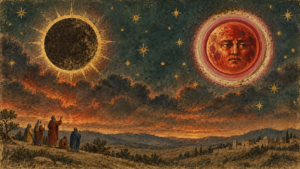
Humans have interpreted lunar eclipses long before modern astronomy explained their cause. A bright Moon suddenly darkening or turning red could feel unsettling when observers had no scientific explanation.
As a result, lunar eclipses acquired very different meanings across cultures. Some traditions associated them with danger, political upheaval, supernatural beings, or cosmic disorder.
Other communities developed rituals intended to protect the Moon or restore balance. These beliefs should not be merged into one universal blood moon meaning.
The more accurate interpretation is that extraordinary celestial events encouraged extraordinary stories. Smithsonian notes that eclipses have influenced myths and religious ideas for thousands of years.
Ancient Mesopotamia and Lunar Eclipse Omens
Ancient Mesopotamians carefully observed the night sky and developed sophisticated systems for tracking celestial events. Lunar eclipses could be interpreted as dangerous signs, particularly when political power was concerned.
Smithsonian Science Education Center notes that Mesopotamian traditions sometimes described the Moon during an eclipse as being attacked by demons. Eclipses could therefore be interpreted as threatening omens rather than neutral astronomical events.
This historical association helps explain why modern blood moon symbolism sometimes includes themes of crisis or dramatic change. Yet ancient omen systems belonged to particular cultural and historical contexts.
They should not be treated as evidence that lunar eclipses cause disasters today.
The history instead shows how strongly humans react to changes in the sky. When something familiar becomes unfamiliar, people naturally search for meaning.
Blood Moons in Biblical Imagery
Biblical passages also contain dramatic imagery involving a Moon that appears like blood. Joel 2:31 refers to the Moon turning to blood, while similar language appears in Acts 2:20 and Revelation 6:12.
These passages use cosmic imagery within prophetic or apocalyptic contexts. They have sometimes influenced modern discussions about blood moon symbolism and end-times beliefs.
However, the biblical text does not explicitly state that every modern total lunar eclipse is a prophetic sign. Equating every blood moon with a specific prediction goes beyond what the passages themselves establish.
For spiritually curious readers, the imagery can instead be explored through themes such as awe, judgment, upheaval, humility, and the limits of human control.
This distinction matters because it separates the actual biblical wording from later interpretations.
Is a Blood Moon Good Luck or a Bad Omen?
There is no universal answer to whether a blood moon represents good luck or a bad omen. Different traditions have interpreted lunar eclipses in very different ways.
Historically, some communities feared eclipses because the familiar Moon seemed to disappear or become blood-red. That visual change could naturally inspire ideas about danger or cosmic disorder.
Modern spiritual interpretations are often more positive. A blood moon may represent release, transformation, courage, personal awakening, or the closing of one phase.
Neither interpretation constitutes scientific evidence that the eclipse changes your luck.
A useful approach is to avoid categorizing the event as inherently “good” or “bad.” Transformation itself can contain both discomfort and opportunity.
The blood moon meaning may therefore depend less on fortune and more on transition. Something can feel intense without being dangerous.
What Does Seeing a Blood Moon Mean Spiritually?
Seeing a blood moon can spiritually symbolize a moment of heightened awareness, emotional release, transition, or reflection. The experience often feels more intense because a familiar celestial object suddenly appears transformed.
The most useful interpretation begins with your circumstances. Think about what occupied your mind before you looked at the Moon.
If you were struggling to release something, the eclipse may remind you that endings are part of larger cycles. If you were beginning something new, the same Moon may symbolize stepping through uncertainty.
You can also use the event as a moment to slow down. Blood moons are predictable astronomical events, but witnessing one directly can create a rare pause from ordinary routines.
That pause may be the spiritual value itself.
Instead of asking, “What is the blood moon telling me?” consider asking, “What becomes clearer when I stop and pay attention?”
This keeps blood moon spiritual meaning thoughtful rather than dogmatic.
Conclusion: What Blood Moon Symbolism May Mean for You
Blood moon symbolism brings together seven powerful themes: transformation, release, shadow work, intuition, courage, completion, and renewal.
The science behind the phenomenon makes those associations surprisingly fitting. The Moon enters Earth’s shadow, becomes red, and eventually returns to ordinary brightness.
Nothing about the Moon itself has been destroyed. What changes is the light reaching it and the way we see it.
That can become a meaningful metaphor during difficult transitions. A period of uncertainty may alter your perspective without defining your entire future.
If you recently saw a blood moon, think about what currently feels unfinished or unusually intense. Consider what you may need to understand, release, or approach differently.
The eclipse does not need to predict anything to become spiritually meaningful.
Sometimes blood moon symbolism is most useful as a reminder that darkness, change, and renewal can belong to the same cycle.
Frequently Asked Questions
What Does a Blood Moon Mean Spiritually in Love?
In relationships, a blood moon may symbolize emotional intensity, honesty, transition, or the closing of an old relationship pattern. It can encourage reflection on feelings that have become difficult to ignore.
That does not mean the eclipse predicts a breakup or new romance. Spiritual interpretation works better when it prompts self-awareness rather than fortune-telling.
Consider whether communication, boundaries, or unresolved emotions currently need attention. The symbolism may be about changing how you relate rather than changing who you love.
Does a Blood Moon Mean Something Bad Will Happen?
No scientific evidence shows that blood moons cause disasters, deaths, wars, or personal misfortune. A blood moon is the natural result of Earth moving between the Sun and Moon during a total lunar eclipse.
Some historical cultures did interpret lunar eclipses as ominous. Those traditions reflect cultural beliefs rather than evidence that eclipses predict harmful events.
If the red Moon feels unsettling, you can interpret it as a symbol of change without assuming danger.
Is a Blood Moon a Sign of Transformation?
Transformation is one of the most common modern interpretations of blood moon symbolism. The Moon visibly moves through brightness, shadow, red coloration, and back toward its familiar appearance.
That progression makes the eclipse a natural metaphor for personal transitions. You may be leaving one stage without fully entering the next.
A blood moon does not cause transformation. It can simply provide a powerful image for changes already happening in your life.
What Should You Do During a Blood Moon?
There is no required spiritual ritual during a blood moon. You can simply watch the eclipse and appreciate the astronomical event.
If you prefer a reflective practice, consider journaling about what you want to release or understand more clearly. Quiet meditation can also help you notice emotions without immediately reacting to them.
You might ask what has completed its purpose and what deserves more attention next.
Any practice should feel meaningful rather than obligatory.
Why Do Blood Moons Feel So Powerful?
Blood moons can feel powerful because they dramatically alter something usually stable and familiar. The Moon becomes darker, redder, and visually unusual over a relatively short period.
Human beings have responded emotionally to eclipses for thousands of years, creating myths, rituals, and explanations around them. SSEC
Modern observers understand the astronomy, but the emotional effect can remain. Knowing how an eclipse works does not prevent it from creating awe.
That combination of science, rarity, darkness, and color helps explain why the meaning of blood moons continues to attract spiritual interpretation.
Read More: Continue exploring celestial symbolism with Lunar Rainbow Meaning: 7 Spiritual Signs to Know