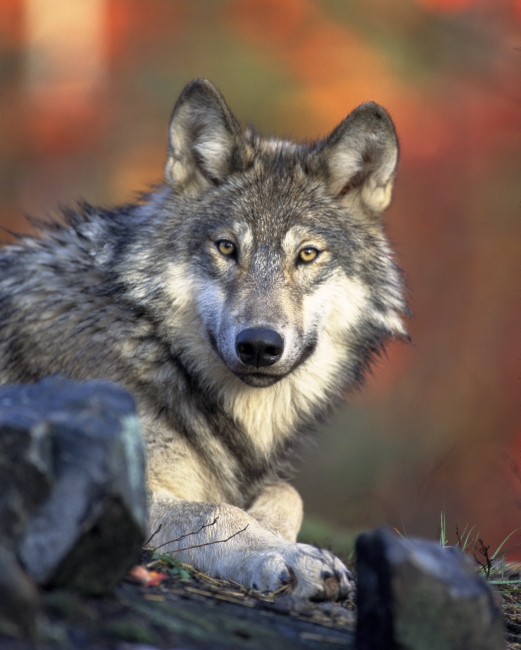
The wolf spirit is often associated with loyalty, intuition, freedom, resilience, protection, communication, and belonging. Wolves can seem fiercely independent, yet their natural lives are deeply connected to family and cooperation.
That contrast is part of their symbolic appeal. Gray wolves usually live in social family groups, and Yellowstone research shows that packs cooperate in raising young, hunting, defending territory, and supporting vulnerable members. The Smithsonian likewise describes wolf packs as family units built around parents and their offspring. Serviço Nacional de Parques
Spiritually, the wolf may invite you to balance independence with connection. Its appearance can become a reminder that knowing your own path does not mean walking it entirely alone.
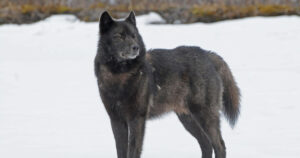
What Does Wolf Spirit Mean?
At its core, wolf spirit symbolism reflects the relationship between instinct and community. Wolves are skilled predators, but survival depends on far more than strength alone.
They communicate, cooperate, care for young, defend territories, and maintain complex social relationships. A wild wolf may also leave its birth pack and travel long distances while searching for a mate or new territory.
That combination makes the wolf unusually rich as a spiritual symbol. It can represent belonging without losing individuality.
The wolf may feel especially meaningful when you are deciding whether to remain with what is familiar or follow a more independent direction. Its symbolism does not automatically favor one choice.
Instead, it asks whether your current relationships give you both connection and room to grow.
The Quick Meaning of Wolf Symbolism
Seven themes are especially useful when exploring wolf spirit animal meaning:
- Loyalty — valuing relationships that are built on trust.
- Intuition — listening closely to instinct and subtle signals.
- Freedom — remaining connected to your authentic nature.
- Family — recognizing the strength of meaningful bonds.
- Communication — expressing needs rather than expecting others to guess.
- Resilience — adapting when circumstances change.
- Independence — having the courage to find your own direction.
These themes are modern spiritual interpretations rather than one universal doctrine. The wolf has carried very different meanings across cultures and historical periods.
Still, many of these associations have clear links with real wolf behavior. The strongest example may be the balance between individual independence and social cooperation.
You may also find its intersting : Hawk Spiritual Meaning: Powerful Signs You Should Know
Wolf Spirit Animal Meaning
The wolf spirit animal meaning is commonly associated with instinct, independence, family bonds, emotional intelligence, and navigating life through both personal judgment and trusted relationships.
The wolf is sometimes portrayed as a solitary creature, yet that image tells only part of the story. Smithsonian describes gray wolves as among the most social carnivores, with typical packs consisting mainly of an adult pair and their offspring.
That makes the wolf a useful spiritual symbol for anyone trying to balance self-reliance with belonging. You can remain independent while still accepting support.
A wolf spirit may also resonate when you are questioning where you belong. The deeper lesson is not simply “follow the pack” or “walk alone.”
It is about learning which relationships strengthen you and when growth requires leaving familiar territory.
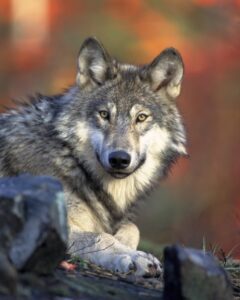
Loyalty, Family, and Belonging
Family is one of the strongest themes in wolf symbolism. Contrary to the popular image of a pack dominated by constant battles for rank, wild packs are usually extended family groups.
Young wolves are raised with help from other members, and cooperation benefits hunting, defense, and survival. In Yellowstone, the current average pack size is around 11.8 wolves, although pack sizes vary with prey and environmental conditions.
Spiritually, this can represent the value of dependable relationships. Loyalty is not blind obedience; it can mean showing up consistently for people who also respect your needs.
A wolf may therefore symbolize examining your own “pack.” Who provides trust, safety, honesty, and encouragement?
Belonging should not require losing your identity. Healthy connection leaves room for both closeness and individuality.
Intuition, Instinct, and Inner Guidance
Wolves depend heavily on awareness. Their survival requires interpreting scent, movement, sound, territory, and the behavior of other wolves.
This makes instinct one of the most natural themes within wolf spirit animal meaning. Spiritually, it may encourage you to notice information that is easy to dismiss when you overthink.
Intuition should not be confused with assuming every feeling is correct. A more grounded interpretation treats intuition as one source of information alongside evidence and experience.
If a wolf symbol keeps appearing during an uncertain period, consider what your first reaction is telling you. Fear, curiosity, attraction, or calmness can each reveal something different.
The wolf spirit may therefore symbolize trusting yourself enough to listen before automatically following the expectations of others.
Freedom, Independence, and Finding Your Own Path
Wolves are highly social, but individual wolves also leave their families. Young adults may disperse in search of mates and unoccupied territory.
The National Park Service notes that dispersing wolves have traveled hundreds of miles, with documented journeys reaching around 500 miles.
This gives wolf symbolism an important second side. Sometimes belonging is essential; sometimes growth requires moving beyond what you already know.
Spiritually, the wolf may resonate when you feel drawn toward a different career, place, relationship pattern, or identity. Independence does not always mean rejecting others.
It can mean developing enough confidence to leave familiar territory when your path requires it.
The deeper wolf spirit meaning is balance: know when connection nourishes you and when independence helps you grow.
What Does Seeing a Wolf Mean Spiritually?
The spiritual meaning of seeing a wolf often centers on awareness, instinct, boundaries, family, or direction. A real encounter can feel intense because wolves are powerful wild animals that most people rarely see closely.
The natural explanation always comes first. Wolves move through territories searching for prey, mates, and other pack members, and wild encounters should be treated with appropriate distance.
In Yellowstone, visitors are instructed to remain at least 100 yards or 91 meters away from wolves and bears. That practical respect fits the symbolism surprisingly well: admiration does not require possession or closeness.
Spiritually, seeing a wolf may encourage you to think about boundaries. You can respect something deeply while still allowing it space.
The encounter can also highlight direction. Ask whether you feel connected to the people around you or whether part of you is ready to explore a different path.
Lone Wolf Symbolism
A lone wolf is often interpreted as a symbol of independence, courage, solitude, or self-discovery. Yet biologically, a lone wolf is not necessarily an animal that rejects social life.
Young wolves commonly leave their natal packs while searching for mates and territory. If successful, a dispersing wolf may eventually form a new family group.
This changes the spiritual metaphor considerably. Being alone can represent a transition between communities, not permanent isolation.
You may enter periods when familiar relationships no longer fit but new ones have not yet formed. That in-between stage can feel lonely without being meaningless.
Lone wolf symbolism may therefore encourage self-trust during transition. Independence can be temporary preparation for a different form of belonging.
Wolf Howling Spiritual Meaning
The spiritual meaning of a wolf howl is often connected with communication, longing, identity, belonging, and calling out across distance.
Real wolves howl for practical reasons. Smithsonian explains that howling helps maintain contact, locate separated wolves, rally the pack, and communicate territorial presence. Individual howls can be heard by other wolves several miles away.
One popular image needs correcting: wolves do not actually howl at the Moon. Their nighttime howling is communication, not lunar worship.
That reality creates an even richer spiritual metaphor. A howl is fundamentally about being heard.
If wolf howling feels meaningful to you, consider where communication is missing in your own life. Perhaps you need to express a boundary, ask for support, or reconnect with someone important.
The wolf spirit here is not silent strength. Sometimes strength means making your presence known.
Wolf Symbolism Across Culture and Folklore
There is no single universal interpretation of wolves. Across history, they have represented protection, danger, wilderness, family, destruction, courage, and origin stories.
That variation reflects the real animal. Wolves can cooperate closely within their families while fiercely defending territory from rival packs.
Human societies have responded to that complexity in very different ways. Some stories fear the wolf, while others place it near the beginning of a people or city.
For spiritual readers, this diversity is useful. It prevents wolf spirit animal meaning from becoming an oversimplified list of fixed rules.
The She-Wolf of Rome: Protection and Origins
One of the best-known historical wolf stories comes from ancient Rome. According to Roman tradition, the abandoned twins Romulus and Remus were discovered and nursed by a she-wolf before later becoming central figures in Rome’s foundation story.
The image became extremely important in Roman art. The Metropolitan Museum of Art notes that the she-wolf nursing the twins became a popular subject during both the Roman Republican and Imperial periods.
Within this tradition, the wolf can evoke nurturing, survival, protection, and origins rather than simply aggression.
The contrast is important. An animal often feared by humans becomes the very creature that preserves the future founders.
Spiritually, this can symbolize unexpected forms of support. Help does not always arrive in the form you imagined.
Why Wolf Meanings Differ Across Traditions
Wolf symbolism should be approached with cultural specificity. Different peoples developed their own relationships with wolves based on landscape, livelihood, stories, religion, and lived experience.
This is especially important when discussing Indigenous traditions. There is no single “Native American wolf meaning” shared by all nations, and presenting one universal interpretation can erase meaningful differences.
Modern spiritual writing often combines unrelated traditions into phrases such as “the wolf means guidance in Native culture.” That is too broad to be reliable.
A better approach is to identify a specific community and documented tradition whenever making a cultural claim.
For personal spiritual practice, you can still connect with qualities such as loyalty, intuition, and independence. Just distinguish your modern interpretation from beliefs belonging to particular cultures.
The Modern Wolf: Fear, Wilderness, and Belonging
Modern wolf imagery carries a striking contradiction. The wolf may appear as a threatening creature in stories, yet contemporary wildlife science reveals an intensely social animal.
Yellowstone research shows that wolf packs benefit from cooperative care, hunting, defense, and complex family structures. Wolves also influence wider ecosystems as major predators.
This contrast explains why modern wolf spirit symbolism can feel so layered. The wolf represents wildness without necessarily representing loneliness.
It can symbolize strength while remaining deeply dependent on relationship.
Perhaps that is why the animal continues to fascinate people. The wolf holds two ideas together: be yourself, but know who your people are.
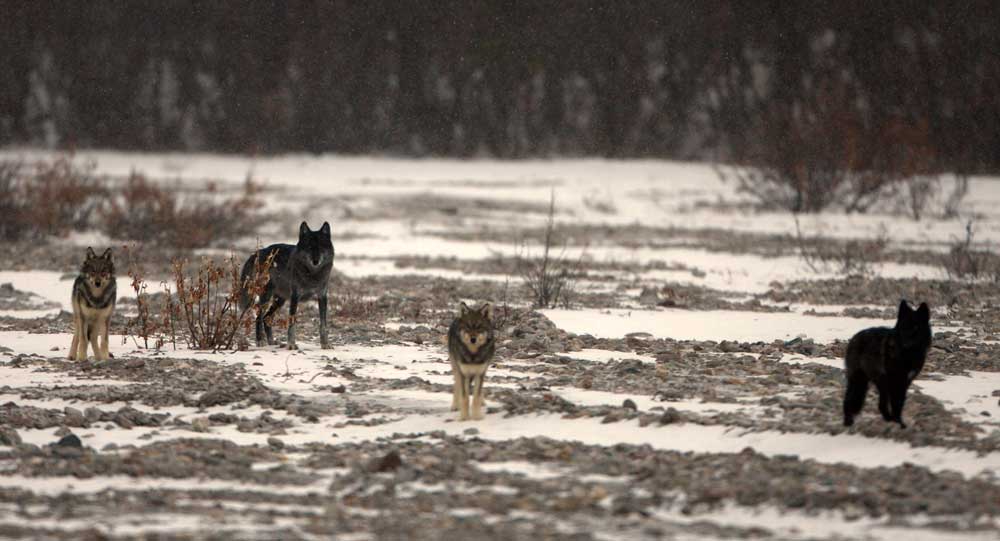
Conclusion: What Wolf Spirit May Mean for You
The wolf spirit brings together seven especially meaningful themes: loyalty, intuition, freedom, family, communication, resilience, and independence.
These associations become more interesting when compared with real wolf behavior. Wolves are neither purely solitary nor blindly dependent on their packs.
They form strong family bonds, communicate across distance, protect territory, cooperate, and sometimes leave home to begin a completely new life.
If wolf symbolism keeps drawing your attention, consider where you currently sit between independence and belonging. Do you need more connection, or more room to follow your own instincts?
You might also consider communication. Perhaps something important needs to be expressed rather than silently carried.
The most useful wolf spirit animal meaning may be simple: trust your instincts, protect meaningful relationships, and know when it is time to find a new path.
You may also enjoy this article: What Does a Fox Symbolize? 5 Spiritual Meanings
Frequently Asked Questions
Is Seeing a Wolf Good Luck?
Seeing a wolf is not universally considered either good or bad luck. Cultural and spiritual interpretations vary widely.
In modern symbolism, a wolf encounter may feel positive when it evokes confidence, instinct, family, or resilience. Someone facing a major decision might interpret the sighting as encouragement to trust their judgment.
There is no scientific reason to believe the animal predicts future fortune. Its personal meaning comes from the reflection the experience creates.
What Does a Black Wolf Symbolize?
A black wolf is often associated in contemporary symbolism with mystery, protection, independence, shadow work, or hidden strength.
Black coloration is also entirely natural. Yellowstone reports that roughly half of its wolves have black coats, caused by a genetic variant associated with coat color. Serviço Nacional de Parques
Spiritually, the color may add a sense of mystery to broader wolf symbolism. It does not make the wolf inherently negative or supernatural.
If black stood out during the encounter, consider what hidden or unexplored part of your life currently needs attention.
What Does a White Wolf Symbolize?
A white wolf is often associated in modern spiritual interpretation with clarity, intuition, resilience, renewal, or navigating uncertainty.
Its symbolism may feel especially powerful because white wolves are visually striking against many landscapes. However, coat color is a biological trait rather than evidence of a particular spiritual message.
The most meaningful interpretation depends on your circumstances. White may suggest clarity to one person and isolation or winter resilience to another.
Treat the color as an additional layer rather than a fixed prediction.
What Does Dreaming About a Wolf Mean?
Dreaming about a wolf may reflect themes of trust, instinct, independence, fear, protection, or belonging. The emotional tone of the dream is often more useful than the wolf alone.
A calm wolf may suggest confidence or companionship, while an aggressive wolf might reflect conflict, fear, or threatened boundaries. A pack may bring relationships and community to mind.
Dream symbolism is highly personal. Consider what the wolf was doing and how you felt before assigning a meaning.
Why Do I Keep Seeing Wolves or Wolf Imagery?
Repeated wolf imagery may feel spiritually significant because themes such as instinct, freedom, and belonging already resonate with your current situation.
There can also be a simple attention effect. Once an image becomes meaningful, you naturally begin noticing it more often in media, art, dreams, and conversation.
Instead of asking only whether the wolf is “sending” you a message, notice the theme that repeats alongside it.
If the image consistently makes you think about independence, family, or finding your direction, that association may be the most useful part of your wolf spirit experience.
You may also enjoy this article: What Does It Mean When a Cardinal Visits You? 6 Good Signs