Seeing a moth at an unexpected moment can feel strangely significant. Moth symbolism is often connected with transformation, intuition, hidden truths, vulnerability, and the search for light. These meanings are symbolic interpretations rather than predictions about what will happen.
There are around 160,000 known moth species worldwide, making moths far more diverse than their quiet nighttime appearances might suggest. Their lives also include dramatic metamorphosis, nocturnal activity, camouflage, and remarkable relationships with plants. Those characteristics help explain why people have associated moths with personal change, mystery, and spiritual searching.
This guide explores what moths symbolize, their spiritual meaning, cultural history, different encounters, colors, and the particularly striking luna moth.
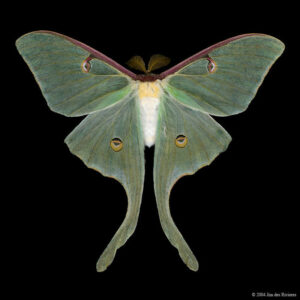
Table of Contents
What Do Moths Symbolize?
In spiritual interpretation, moths often symbolize transformation, intuition, vulnerability, determination, surrender, and movement toward illumination. Because many moth species are active after dark, they can also represent learning to move through uncertainty without having every answer.
Their biological life cycle reinforces the transformation theme. Moths move through egg, larval, pupal, and adult stages, so their visible form changes dramatically before maturity. That natural process does not prove a spiritual meaning, but it provides a powerful metaphor for human growth.
Moth symbolism can therefore be understood as an invitation to consider what is changing beneath the surface. A moth appearing during an uncertain period may remind you that transformation is often incomplete before it becomes visible.
[PLACE YOUR INTERNAL LINK HERE — Anchor text: spiritual meaning of transformation]
Quick Moth Meaning at a Glance
If you are asking what do moths represent, several interpretations appear repeatedly in modern spiritual writing and older symbolic traditions.
| Moth theme | Possible symbolic meaning |
|---|---|
| Metamorphosis | Personal transformation and renewal |
| Night activity | Intuition and navigating uncertainty |
| Light | Truth, purpose, or spiritual longing |
| Fragility | Vulnerability and sensitivity |
| Persistence | Continuing despite uncertainty |
| Camouflage | Hidden qualities or overlooked truths |
| Short adult life | Impermanence and living intentionally |
| Moon association | Inner reflection and emotional awareness |
| Emergence | Moving into a new stage of life |
These meanings should be treated as reflective possibilities, not universal rules. The meaning that feels relevant may depend on what happened, how you felt, and what was unfolding in your life.
Moth Spiritual Meaning and Core Themes
The broader moth spiritual meaning often revolves around change occurring beyond ordinary sight. Unlike brightly visible daytime butterflies, many moths move through darkness, rest unnoticed, and reveal intricate markings only when observed closely.
That combination has encouraged associations with the subconscious, intuition, hidden potential, and quiet transformation. Moths may therefore resonate most strongly during periods when your next direction is not yet obvious.
They can also offer an interesting reminder about appearances. The Smithsonian notes that although many moths look subdued, numerous species display spectacular colors and patterns. Symbolically, that contrast can suggest that something understated may contain more complexity than first appears.
[PLACE YOUR INTERNAL LINK HERE — Anchor text: animal symbolism and spiritual meanings]
Transformation and Rebirth
Transformation is perhaps the most familiar theme within moth symbolism. Like butterflies, moths undergo complete metamorphosis, radically changing between their larval and adult forms.
Spiritually, this process may mirror periods when an old identity no longer fits. You may be leaving a relationship, changing careers, reconsidering a belief, or quietly becoming someone different.
A moth can therefore be interpreted as a symbol of transition rather than instant rebirth. Growth rarely happens in a single dramatic moment. Much of it occurs privately, slowly, and without outside recognition.
This interpretation can be especially meaningful when life feels suspended. What appears to be inactivity may instead be preparation.
Intuition, Darkness, and Hidden Truths
Night is another major influence on moth meaning symbolism. Many moth species are nocturnal, moving through environments where humans naturally see less clearly.
For spiritual readers, darkness does not have to represent something negative. It can symbolize mystery, the unconscious, unanswered questions, or experiences that require intuition rather than certainty.
Seeing a moth may therefore encourage reflection on what you already sense but have not fully acknowledged. Perhaps a situation looks acceptable logically, yet something feels unsettled underneath.
The spirit meaning of moth in this context may be simple: pay attention to subtle information. Intuition works best as one source of insight alongside observation, evidence, and thoughtful judgment.
[PLACE YOUR IMAGE HERE — Alt text: Moth flying through darkness as a symbol of intuition and inner guidance]
Attraction to Light and Spiritual Seeking
The expression “like a moth to a flame” has strongly influenced moth symbolism, creating associations with attraction, devotion, desire, and the pursuit of illumination.
Interestingly, current science complicates the familiar image. A 2024 study in Nature Communications used three-dimensional flight tracking and found that insects near artificial lights often orient their backs toward the light. This disrupts normal flight control and can leave them circling, stalling, or diving rather than intentionally flying straight toward the source.
That scientific distinction makes the metaphor even more interesting. Spiritually, a moth can represent the question: What light am I following, and is it actually guiding me?
Not every attractive goal is beneficial. Moth symbolism can therefore represent both spiritual aspiration and the importance of discernment.
What Does a Moth Symbolize in Different Traditions?
There is no single historical definition answering what does a moth symbolize across every culture. Symbolism changes according to religion, geography, species, literature, and artistic tradition.
Some historical associations emphasize devotion and spiritual longing. Others connect particular moth species with death or unsettling omens. Modern metaphysical interpretations often add transformation, intuition, feminine energy, lunar symbolism, and shadow work.
Keeping those traditions separate prevents modern ideas from being presented as ancient universal beliefs.
Sufi Moth-and-Flame Symbolism
One especially well-documented tradition appears in Persian Sufi poetry. The Metropolitan Museum of Art describes historical lamp stands engraved with verses from Sa’di’s The Moth and the Candle.
Within that metaphor, the moth represents the human soul or devoted lover. The flame represents the divine beloved, and the moth’s consuming attraction expresses longing for union with God.
This tradition gives moth symbolism a deeper meaning than simple attraction. It becomes a symbol of devotion so complete that the ordinary self is surrendered.
For modern readers outside that religious tradition, the image can still prompt reflection. What are you devoted to, and what parts of yourself are you willing to change in pursuit of it?
[PLACE YOUR INTERNAL LINK HERE — Anchor text: spiritual meaning of light]
Death, Omens, and the Death’s-Head Hawkmoth
Not every historical interpretation of moths is gentle. The striking death’s-head hawkmoth has long inspired darker associations because its thorax bears a pattern resembling a human skull.
The Natural History Museum notes that the moth was regarded in medieval Europe as an omen of death because of that skull-like marking. This historical belief should not be mistaken for evidence that seeing one predicts death.
Modern spiritual interpretation can view this symbolism more metaphorically. Death imagery frequently represents endings, impermanence, release, and the closing of one life chapter.
In that sense, darker moth symbolism may ask what needs to be released rather than suggesting that something terrible will happen.
What Do Different Moth Encounters Mean?
The circumstances of an encounter can shape its personal meaning. A moth entering your home may feel different from one landing on your hand or appearing repeatedly over several nights.
There is also usually a straightforward natural explanation. Moths may seek shelter, encounter artificial lighting, rest on suitable surfaces, or follow environmental cues.
Spiritual reflection does not require rejecting those explanations. You can recognize normal moth behavior while still asking why the experience felt meaningful to you.
A Moth in Your House
A moth inside your house is often interpreted symbolically as something hidden entering your conscious awareness. Because a home can represent your private life, the encounter may encourage reflection on personal emotions or neglected concerns.
Before assigning a spiritual interpretation, check practical possibilities. Some moths enter accidentally, while pantry or clothes moths may indicate stored-food or textile issues.
If nothing unusual is happening biologically, moth symbolism can still offer a useful reflective question: What has recently entered my inner world and asked for attention?
[PLACE YOUR IMAGE HERE — Alt text: Moth resting inside a home near a window at night]
A Moth Landing on You
When a moth lands on you, the encounter may feel unusually intimate. Some people interpret this as a symbol of trust, receptivity, sensitivity, or the need to become still.
There is no scientific evidence that a moth deliberately selects someone to deliver a spiritual message. It may simply have found a convenient surface, scent, temperature, or resting place.
Yet the emotional response can still matter. If the moment created calm, curiosity, or wonder, moth symbolism may encourage you to notice those feelings rather than searching for a fixed prediction.
The encounter can become an invitation to observe what was on your mind immediately beforehand.
Seeing Moths Repeatedly
Repeated encounters naturally attract attention. Psychologically, once something becomes significant, you may also notice it more often because your attention has become sensitized to it.
From a symbolic perspective, repeated moth sightings may represent an unresolved theme. Transformation, direction, intuition, attraction, or uncertainty may currently deserve reflection.
Ask where the encounters occur and what emotion accompanies them. A recurring moth near the same porch light has a clear environmental explanation, while repeated sightings in different contexts may simply feel more personally significant.
Either way, what do moths symbolize is less important than what the pattern helps you notice about your own experience.
[PLACE YOUR INTERNAL LINK HERE — Anchor text: meaning of seeing animals repeatedly]
Moth Colors and Species Symbolism
Color often changes how people interpret moth symbolism, although these meanings usually come from modern spiritual associations rather than universal historical traditions.
A white moth might evoke purity because white carries that symbolism elsewhere. Black may suggest mystery because darkness has long carried hidden or unknown associations. Green can evoke renewal because of its relationship with vegetation and spring.
Species also matter. A large luna moth creates a very different emotional impression from a small brown house moth, even though both belong to the same insect order.
White, Brown, Black, and Green Moths
Common interpretations include:
- White moth: clarity, peace, transition, spiritual reflection.
- Brown moth: grounding, simplicity, home, patience.
- Black moth: mystery, shadow work, endings, unexplored emotions.
- Green moth: renewal, healing, growth, nature.
- Golden moth: confidence, illumination, creativity.
These associations are best used as prompts rather than rules. Your cultural background and personal experiences can change what a color means to you.
For instance, black may feel frightening to one person and protective to another. Effective moth symbolism leaves room for that difference.
Luna Moth Symbolism
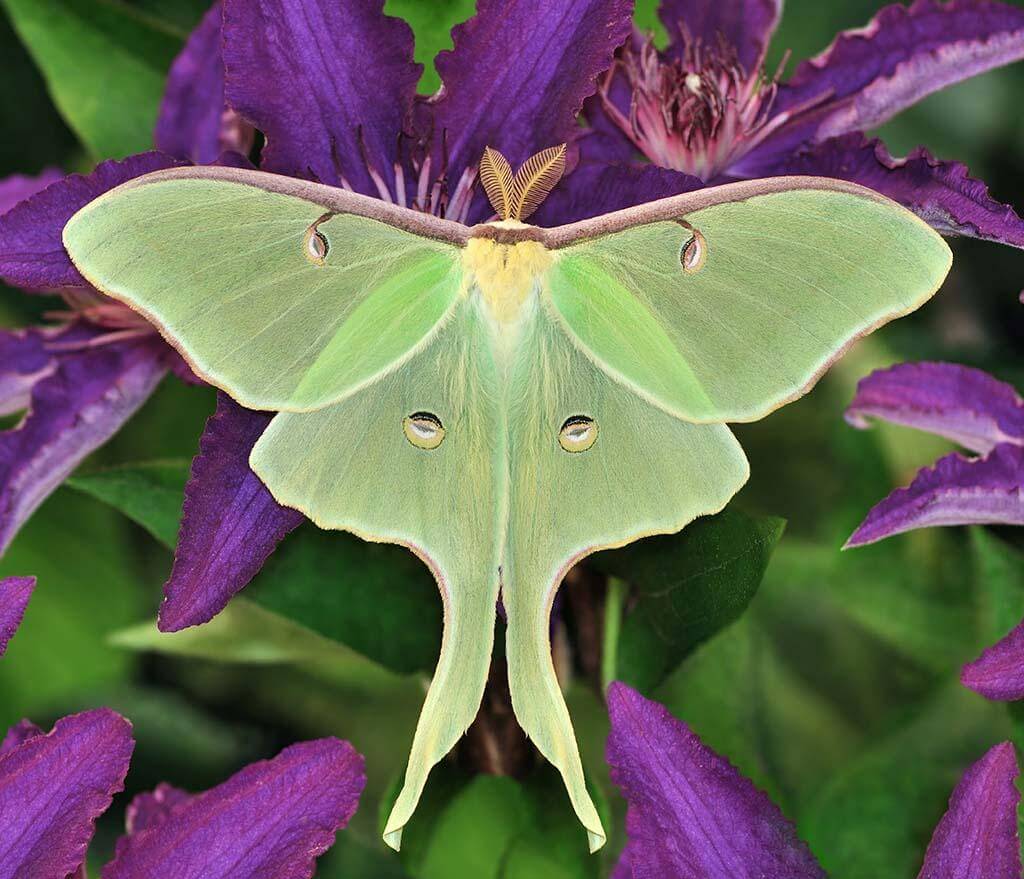
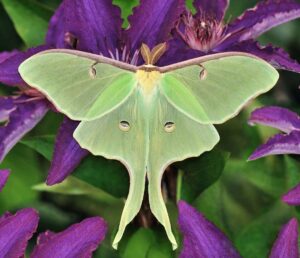
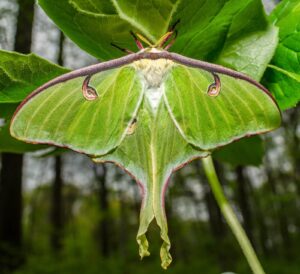
Few moths inspire as much spiritual curiosity as the luna moth. Its pale green wings, long tails, moon-like markings, and nocturnal habits naturally encourage associations with lunar energy, transformation, renewal, and fleeting beauty.
The species’ biology adds another striking layer. Adult luna moths belong to the giant silk moth family and lack functional mouthparts, so they do not eat as adults. Their adult stage is brief and primarily focused on reproduction.
That short adult existence has helped inspire modern symbolic interpretations involving impermanence and purposeful living. A luna moth may therefore invite reflection on what deserves your attention while time is available.
Its name also comes from its moon-like wing markings rather than a scientifically established connection with mystical lunar forces. Symbolically, however, the moon association makes luna moths especially resonant for themes of cycles, intuition, and inner change.
[PLACE YOUR INTERNAL LINK HERE — Anchor text: luna moth spiritual meaning]
How to Interpret Moth Symbolism Personally
The most useful approach to moth symbolism is reflective rather than predictive. Instead of asking, “What will this moth cause?” ask, “Why did this encounter stand out to me?”
Consider four details:
- What was happening in your life? Changes often shape how symbols feel.
- How did you react? Fear, peace, fascination, or sadness can change the interpretation.
- What was the moth doing? Resting, circling light, entering your home, or landing nearby creates different associations.
- Which meaning feels relevant without forcing it? A symbol should encourage reflection, not anxiety.
You can also keep a short journal entry describing the encounter before researching interpretations. This protects your first impression from being overwritten by someone else’s meaning.
Biology can enrich the process rather than diminish it. Moths are genuine pollinators, and Smithsonian resources note that many night-blooming plants use pale flowers and strong scents that help attract nocturnal moth visitors. Their real ecological role can make themes of connection, unseen contribution, and nighttime activity especially meaningful.
The most grounded moth spiritual meaning therefore combines curiosity with perspective. You can appreciate a symbolic encounter without needing to treat it as supernatural proof.
Conclusion: Reflecting on Moth Meaning
Moth symbolism centers most often on transformation, intuition, spiritual searching, vulnerability, hidden potential, and learning to navigate uncertainty. Historical traditions add other layers, from Sufi devotion to older European associations between particular moths and death imagery.
The moth’s natural life makes those metaphors compelling. It transforms completely, often moves after dark, interacts with light in surprising ways, and can carry extraordinary patterns that remain hidden until someone looks closely.
If a moth appears at a meaningful moment, consider it an invitation to reflect rather than a prediction. Ask what is changing, what is drawing your attention, and what you may be learning to navigate without complete certainty.
Your experience provides the context that symbolism alone cannot. If moths keep appearing in your life, write down each encounter and look for the emotional or situational pattern connecting them.
[PLACE YOUR INTERNAL LINK HERE — Anchor text: complete guide to spiritual animal symbolism]
FAQs About Moth Symbolism
What do moths symbolize spiritually?
Moths commonly symbolize transformation, intuition, hidden knowledge, vulnerability, and the search for illumination. The precise moth spiritual meaning depends on the encounter and the beliefs of the person interpreting it. These meanings are reflective traditions rather than scientifically proven messages.
Is seeing a moth a good sign?
A moth does not have to be interpreted as either good or bad. Modern moth symbolism often emphasizes growth, change, and intuitive awareness. Some older traditions associated specific moths with omens, but those beliefs should not be treated as predictions.
What does a moth symbolize when it enters your house?
A moth in the home may symbolically represent something private or hidden coming into awareness. There are also ordinary biological explanations, including shelter and nearby lighting. Consider practical causes before deciding whether the experience holds personal meaning.
What do moths represent compared with butterflies?
Both can represent transformation because both undergo complete metamorphosis. Moths are more commonly associated with night, intuition, hidden truths, and movement through uncertainty. Butterflies are often symbolically linked with visible renewal, freedom, and outward transformation.
What is the spirit meaning of a moth around light?
Spiritually, a moth near light can represent searching for truth, purpose, love, or enlightenment. It can also symbolize becoming overly consumed by something attractive. Current research suggests insects near artificial lights can experience disrupted flight orientation, so the familiar “moth chasing the flame” image is biologically more complicated than the metaphor suggests.

Agatha Weiss is a writer and researcher at Mystic Decode, passionate about exploring spiritual meanings, symbolism, intuition, and the hidden messages found in everyday life. Drawing from years of personal experience, study, and curiosity about spiritual traditions, she created her work to help readers better understand symbols, signs, dreams, synchronicities, and their deeper meanings in a practical and thoughtful way.